
A Sudden Stratospheric Warming event has begun, starting one of the earliest collapse events of the Polar Vortex. The latest forecasts show this collapse from the stratospheric warming impacting the lower levels, bringing cold weather and snowfall to certain areas across the United States and Canada, and Europe.
A strong Polar Vortex locks the cold air into the polar regions, creating a mild winter. But when the Polar Vortex is disrupted or collapsed, the cold air can escape, unleashing proper winter weather in the mid-latitudes.In this article, we will look at the latest stratospheric warming data and the collapsing Polar Vortex. You will see how these stratospheric events will release cold and snow across the United States, Canada, and also Europe, creating a significant pattern change in December and (as currently forecast) also snowfall for the holidays.
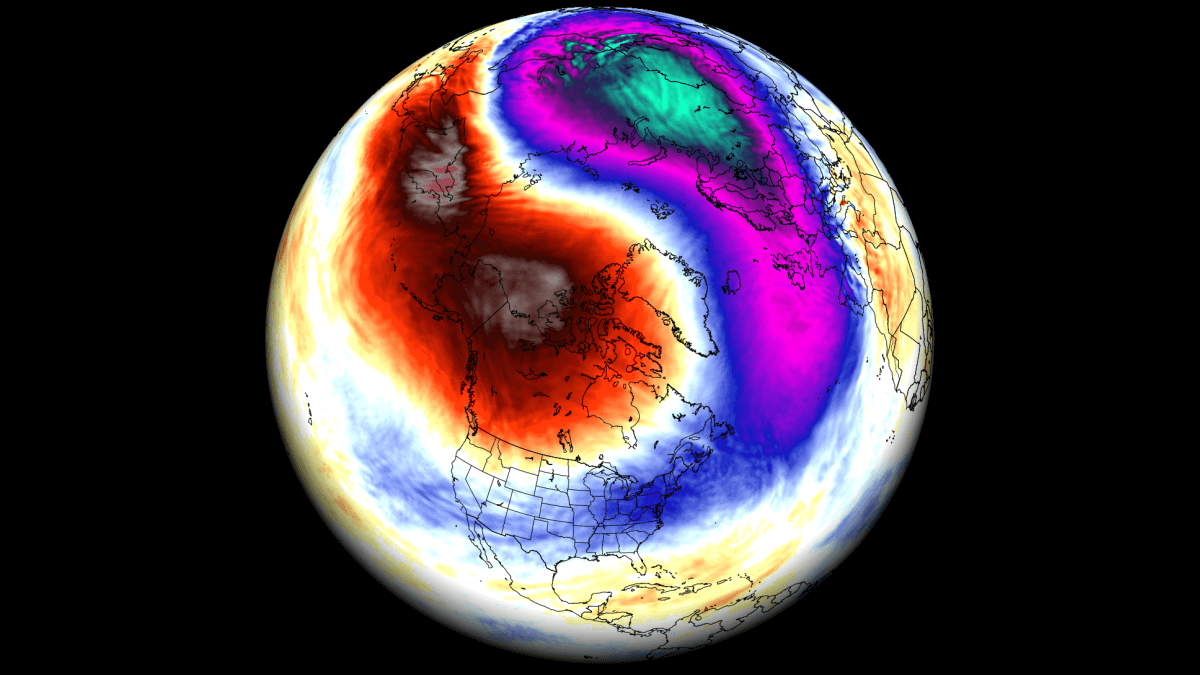
THE COLD POLAR VORTEX
To understand what the Polar Vortex is and how it works in a simple way, you don’t need to be a weather expert.
You can simply imagine the Polar Vortex as a large low-pressure area, acting like a spinning “wall” over and around the polar regions from the surface to the stratosphere (over 50km/30miles high), containing the cold polar air inside.
For this reason, we separate the entire Polar Vortex into an upper (stratospheric) and a lower (tropospheric) part. They both play their role differently, so we monitor them as two separate systems. But together, the two parts form the whole winter circulation and shape our daily weather at the surface.
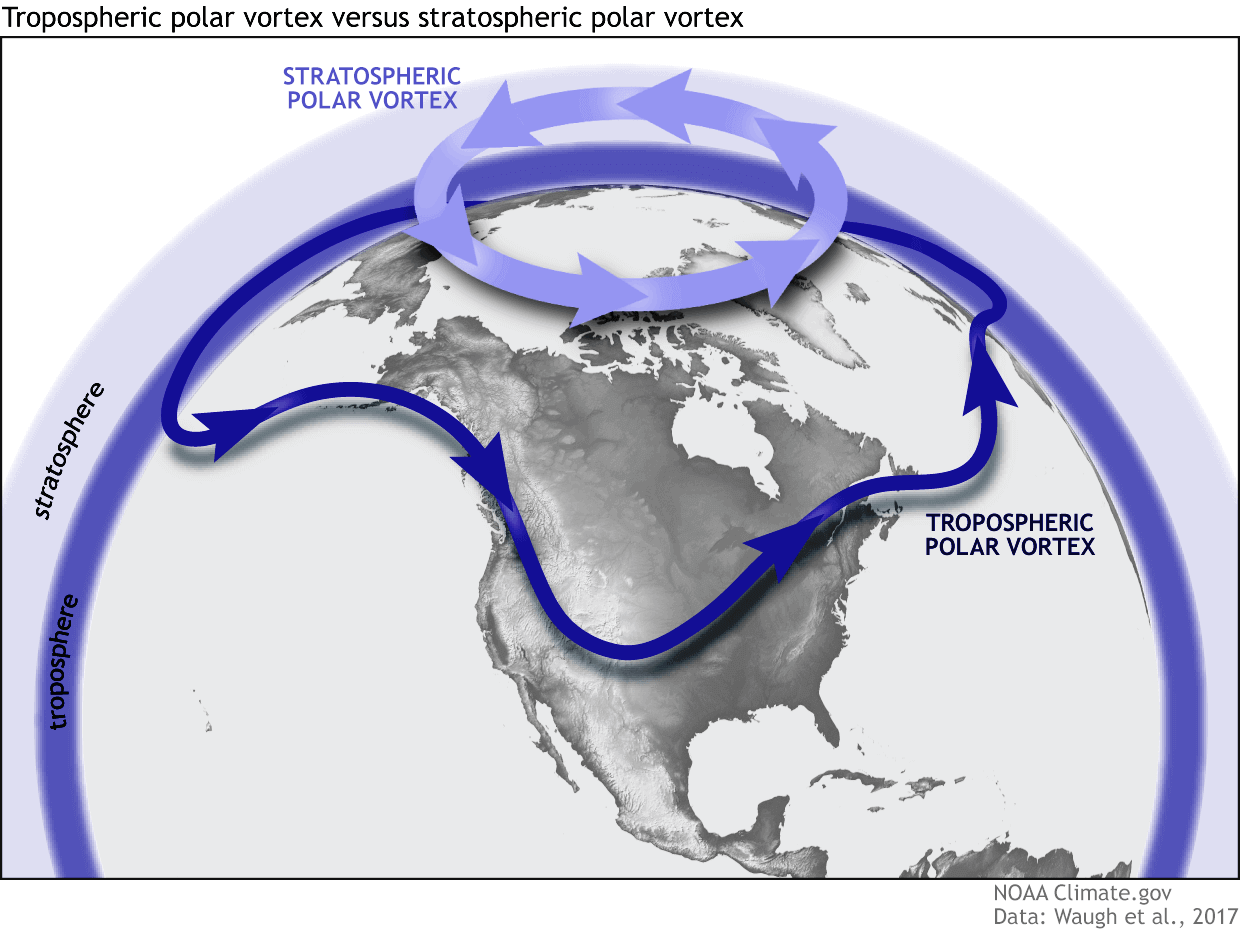
A strong (stable) Polar Vortex means a strong polar circulation. This locks the colder air into the polar regions, preventing its escape. As a result, this creates milder winter conditions for most of the United States, Europe, and other mid-latitudes.


Weather Knowledge- 63
By Vagarian Gokul
How does the Stratocumulus cloud cover over the subtropical Indian Ocean actively take part in the Asian Monsoon circulation ? Here I explain some of the dynamical mechanisms and aspects involved :
-----------------------------------------------------------------------------
The subtropical Indian Ocean, during this time of the year is usually covered by large areas of marine boundary layer clouds (Stratocumulus and Stratus). These clouds reflect a large amount of solar radiation (short wave) back to space, thus playing an important role in the Earth's radiation budget. On the other hand, the tops of these clouds emit equally large amounts of long wave radiation to the space, usually resulting in strong cloud top radiative cooling. This results in modifications to the diabatic heating profile of the atmosphere that enhances the subtropical high pressure systems. As a consequence to these modified heating profiles, anomalous Potential Vorticity (PV) sources are generated in the vicinity of the cloud layer which enhances the stability of the air column and leading to an enhancement of the Subtropical High. We, in our recently published work in the Journal of Climate Dynamics, have brought out the associations of such clouds with the Indian/Asian Monsoon circulation on sub-seasonal time scales. There we show the dynamical associations of high and low frequency modes of intraseasonal variability between the subtropics and the Monsoon region explaining the role of cloud radiative feedback in modifying the large scale circulation. I would like to bring out one such ongoing event where currently there are widespread stratocumulus clouds off-shore the Australian west coast associated with an eastward propagating High and an evolving westward propagating Tropical moist Rossby waves in the Asian monsoon region. In such situations, the cloud radiative effects feedback to the large scale circulation that has significant consequences such as enhancing the cross equatorial moisture transport and many other processes. To get a detailed understanding of the nature of such clouds systems and to know the dynamics involved.
WEATHER KNOWLEDGE - 62
SPRITE PICS


.jpg)
.jpg)
Weather Knowledge 61
Flying into the Eye of Hurricane
Last night, we flew into the eye of Hurricane Erin—and captured the breathtaking stadium effect. These missions provide data to the National Hurricane Center, helping keep communities safe before the storm makes landfall. #WeatherReady


